

Start with the decisions your customers need to make.
A useful website answers practical questions before asking someone to contact you. What do you do? Who is it for? Where do you work? What demonstrates your experience? We use those questions to define the main pages and the information each one needs.
A construction company, property business and professional adviser have different buying journeys. The brief should reflect those differences, including the enquiries you want more of and the work that falls outside your offer.
Agree the structure before designing the pages.
We turn the brief into a page plan covering services, project examples, company information and contact routes. A larger website may also need resources, locations, a blog or separate journeys for different audiences. Each page should have a clear purpose and a place in the navigation.
The proposal identifies what will be produced, which materials you supply and where additional work is needed. That makes decisions about scope, budget and review stages easier to manage.
- Service pages that answer specific customer questions
- Project pages showing relevant work and responsibilities
- Clear navigation and direct email or telephone actions
Build the message around real evidence.
Good copy connects your services with the problems customers are trying to solve. We organise the content around the offer, the working process, relevant experience and the next step. Existing brochures and presentations can help, but website copy usually needs a different order and shorter, more focused sections.
Project photographs, accurate descriptions and approved client feedback provide evidence. We identify missing material early and agree who will approve factual claims before they appear on the finished website.
A distinctive design that remains easy to use.
The design should feel like your business and make its information easier to follow. Typography, spacing, imagery and colour work together to establish a clear hierarchy. Important contact actions belong where visitors are ready to use them, including the opening section and relevant service pages.
We consider phone, tablet and desktop layouts throughout development. Navigation, touch targets, readable text and image crops are reviewed at different sizes, rather than treating the mobile version as a final adjustment.
Choose technology around the way you will maintain the site.
A static website can suit a business that needs a fast, focused presence and occasional updates through a developer. An editable publishing system may be more appropriate when several people add products, articles or pages frequently. The right choice depends on the actual workflow, integrations and long-term ownership.
We discuss those requirements before selecting the implementation. The aim is a manageable website with clear handover arrangements, rather than a collection of features that creates unnecessary work after launch.
Include technical SEO and performance in the build.
Search preparation includes sensible page addresses, descriptive titles, useful headings, internal links and content that explains the subject of each page. Where there are several language versions, their relationships need to be clear. Images and other media should support the page without making it unnecessarily heavy.
We review the technical foundations and important user journeys before launch. Search visibility also depends on competition, relevance and ongoing content, so a new website does not come with a guaranteed ranking or a fixed performance score.
Relevant experience with UK businesses.
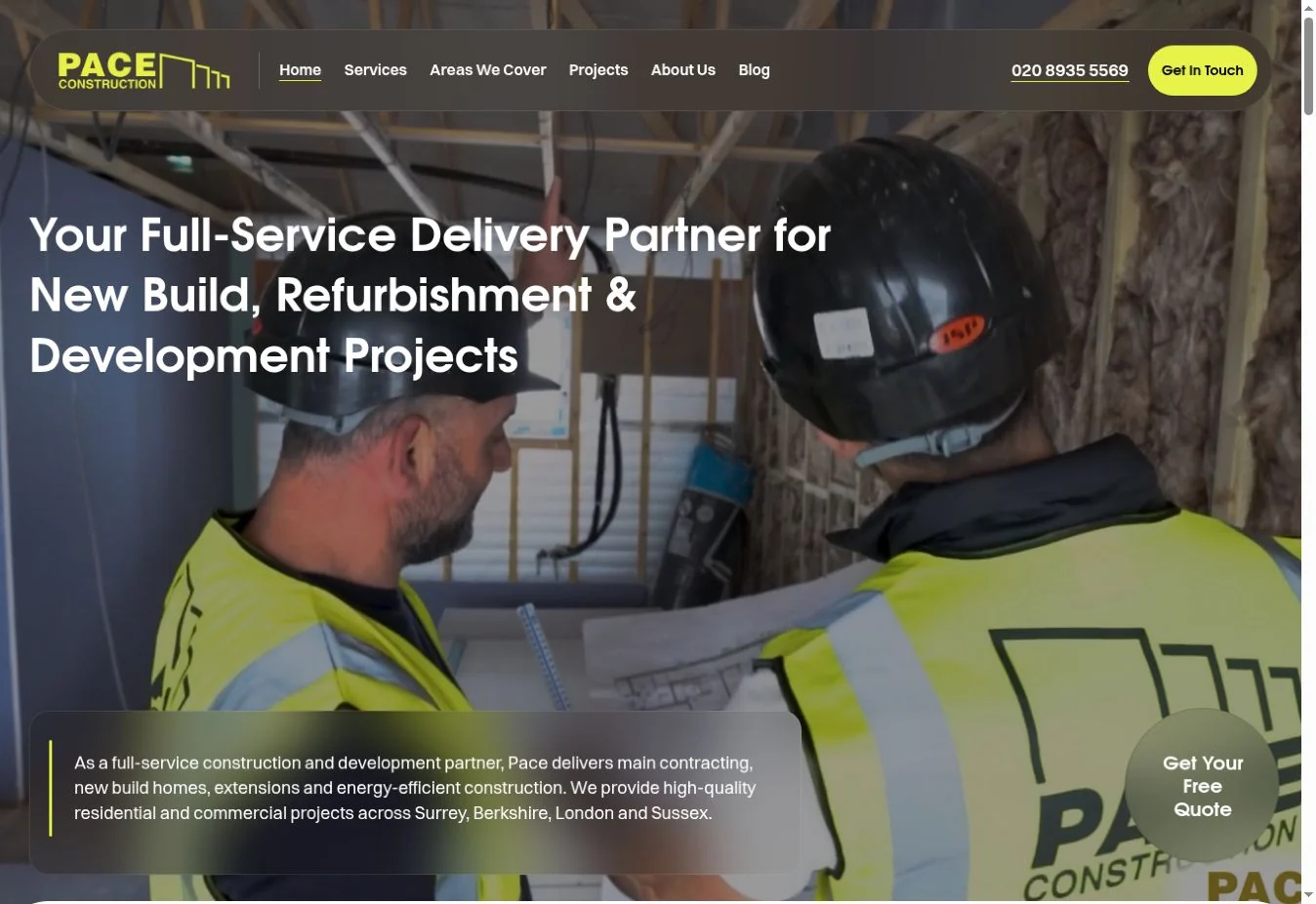
Our Pace Construction work brings services, completed projects and areas of operation into one coherent website for homeowners and developers. Ravendale Homes uses a focused property landing page with architectural visuals, floor plans and a sales brochure. These are different formats built around different customer decisions.
That experience informs how we discuss a new brief, without assuming your business needs the same website. We work remotely from Montenegro and keep the project organised through agreed written feedback, materials and review stages.
Understand what affects the price and delivery schedule.
Page count is only one part of a website estimate. Content preparation, design complexity, languages, integrations, migration and the quality of existing material can have a greater effect on the work involved. A clear initial scope makes the quotation more meaningful than a price attached to an undefined number of pages.
The delivery plan also depends on approvals and access to materials. We agree milestones and identify dependencies, then update the plan when a requested change affects the work.
Prepare for launch and keep ownership clear.
Before publication, we check the agreed pages, contact actions, links, mobile layouts and launch settings. When an old website is being replaced, existing URLs and valuable content need a migration plan. Domain, hosting and access responsibilities should be settled before the launch date.
After handover, you should know how changes will be made and who to contact for help. Maintenance, new content and further development can be agreed separately around the way your business intends to use the site.
Common questions
Do you work with businesses outside London?
Yes. We work with businesses across the UK and other international markets. AbakusWeb is based in Montenegro. The project can be organised remotely, with the scope, communication and review stages agreed before development begins.
What should we send for an initial website enquiry?
Send your current website if you have one, a short description of the business, your main services and what you want the new site to achieve. Examples, existing branding and an outline of the required pages are useful too.
Can you write or improve the website content?
Content planning and copy can be included in the agreed scope. We work from accurate information about your business and identify the material we need from you, including services, project details, photographs and approved client feedback.
Will we be able to update the website ourselves?
That depends on the implementation we agree. Some businesses prefer an editable system; others prefer a static site with changes handled through their developer. We explain the maintenance implications before choosing the technical approach.
Can you build a multilingual website?
Yes. We plan separate content and page addresses for the required languages, along with appropriate language switching and annotations. Translation and local market adaptation need to be included in the scope rather than assumed to happen automatically.
Is ongoing maintenance included in a new website?
The proposal states the handover and support arrangements. Regular maintenance and future development are discussed separately unless expressly included. We explain what the chosen website needs after launch so you can decide how it will be supported.